In Vietnam’s evolving housing market, speed alone is no longer enough. Buyers now expect homes that are not only delivered fast, but also durable, functional, and free from costly defects. Projects that rush construction at the expense of quality often face hidden delays: unsold inventory, constant repairs, warranty claims, and weakened cash flow. In reality, speed without quality is not real speed.
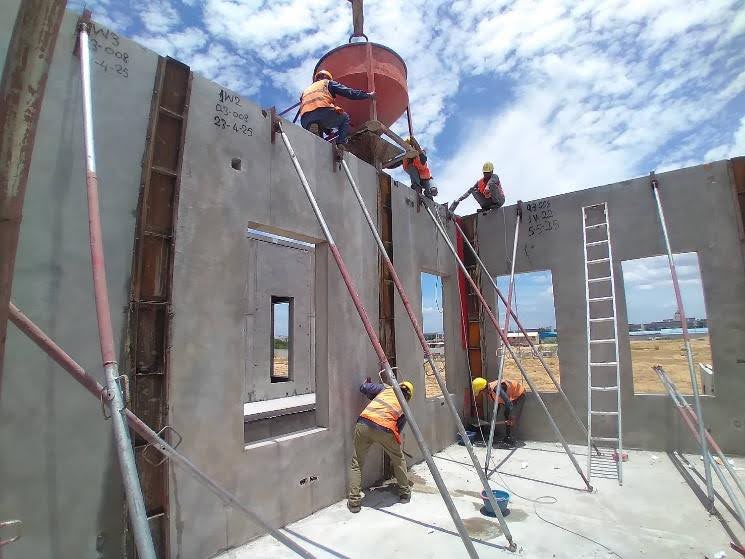
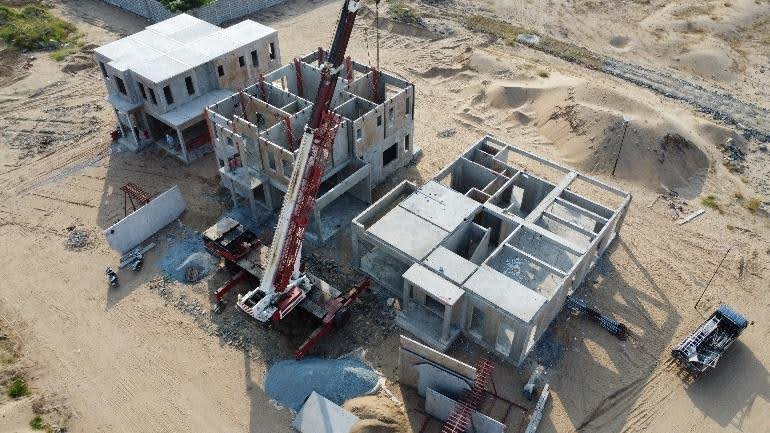
This is where Fully Precast / Total Precast systems, or PCBS (Precast Concrete Building System), bring decisive advantages. By shifting critical work into a factory-controlled environment, supported by BIM planning and cast-in-place wet-joint techniques, PCBS ensures precision, reduces site errors, and delivers homes that feel truly “ready to live in” from day one. For buyers, this builds trust and satisfaction; for developers, it strengthens reputation, lowers rework costs, and sustains sales momentum.

Why quality matters as much as speed
Traditional site-based construction depends heavily on workmanship. In large-scale housing, this often results in defects such as cracking walls, uneven finishes, water leakage, and even structural mistakes caused by poor coordination. These visible flaws erode buyer confidence and delay sales, while hidden defects increase warranty burdens and long-term liabilities.
By contrast, Total Precast housing minimizes these risks. With factory-controlled production, integrated BIM coordination, and wet-joint details that ensure monolithic structural continuity and waterproofing, PCBS significantly reduces variability. Buyers experience smoother handovers, fewer callbacks, and homes with lasting durability. This shift from site risk to factory reliability turns engineering quality into a marketing advantage, directly supporting sales velocity and brand equity.
The strategic role of PCBS in Vietnam
For Vietnam, the government has set a target of nearly 1 million affordable housing units by 2030. To achieve this, the country needs not just speed, but repeatable and reliable quality at scale. PCBS provides exactly that: once design and production are established, the same system can be replicated across thousands of units consistently. This repeatability ensures developers can maintain sales campaigns, construction schedules, and financing cycles without disruption.
Key advantages of Fully Precast / PCBS for quality delivery:
- Consistent quality: Factory QA/QC ensures standards are met before delivery.
- Reduced defects: Minimizes cracking, leakage, and finishing issues common in traditional methods.
- Marketing value: Clean handovers build trust, strengthen referrals, and protect pricing power.
- Scalability: Supports replication across large-scale housing with predictable performance.
- Durability: Wet-joint technology ensures structural integrity and long-term performance.
Building trust through pilot projects
The path forward for Vietnam is to start small but think big. Developers should adopt PCBS in carefully selected pilot projects, proving both speed and quality in practice. These projects can demonstrate how Fully Precast / Total Precast housing meets market expectations, reduces defects, and accelerates the sales cycle. Once validated, the model can be expanded into larger developments, creating not just faster housing, but better housing that buyers genuinely trust and want to live in.
In real estate, speed sells the first batch, but quality sustains the rest. By combining both through PCBS, Vietnam has the opportunity to redefine its public housing — building not only faster but also stronger, cleaner, and more reliable homes that support long-term growth in the market.